Living in Tokyo as an international student is exciting, but your first month includes important practical tasks. This guide covers registration, health insurance, transport, budgeting, safety, and the support available at Shinjuku Gyoen Gakuin.
If you are planning to study Japanese in Shinjuku, this guide will help you understand what to do during your first 30 days in Tokyo. Requirements can differ depending on your residence status and where you live, so always check the latest information with your local municipal office, the Immigration Services Agency of Japan, and your school.
Before you arrive: keep your essential documents together
Prepare one folder that you can carry with you. It should include your passport, Certificate of Eligibility and visa documents, school admission documents, accommodation details, emergency contacts, and any documents the school has asked you to bring.
Keep digital copies in a secure place, but carry the originals you may need at immigration, your municipal office, or school. Do not put important documents in checked luggage.
If you have arranged a dormitory or airport pickup through Shinjuku Gyoen Gakuin, confirm the arrival details with the school before you travel. The school’s dormitories are within walking distance of the campus, and the current facilities and fees are listed on the Student Dormitory Information page.
Days 1–7: settle in and learn your immediate area
Check your residence card and address
Mid- to long-term residents normally receive a residence card when entering Japan through a major airport. Check that the information on the card is correct and keep the card with you as required.
Once you have decided where you will live, you must register your address at the municipal office for that address. New mid- to long-term residents must generally submit the notification within 14 days of establishing their residence. Bring your residence card—or your passport if your residence card will be issued later—and any additional documents requested by the municipality.
If you live in Shinjuku City, check the city’s current multilingual guidance before visiting the office. Counter locations, required documents, and opening hours can change.
Learn the route to school
Take a practice trip before your first class. Save the school address and the nearest-station route on your phone, but also note the route offline in case you lose mobile service.
Shinjuku Gyoen Gakuin is about a 10-minute walk from Shinjuku Station and about a 3-minute walk from the nearest station. Tokyo stations can be large, so allow extra time during your first week and remember the exit number you use.
Buy only the essentials first
You do not need to furnish your entire room on the first day. Start with bedding, toiletries, basic food, a charger or adapter if needed, and a small emergency supply of water and food. Confirm what your accommodation already provides before buying appliances or furniture.
Days 8–14: complete health and daily-life arrangements
Confirm your health-insurance procedure
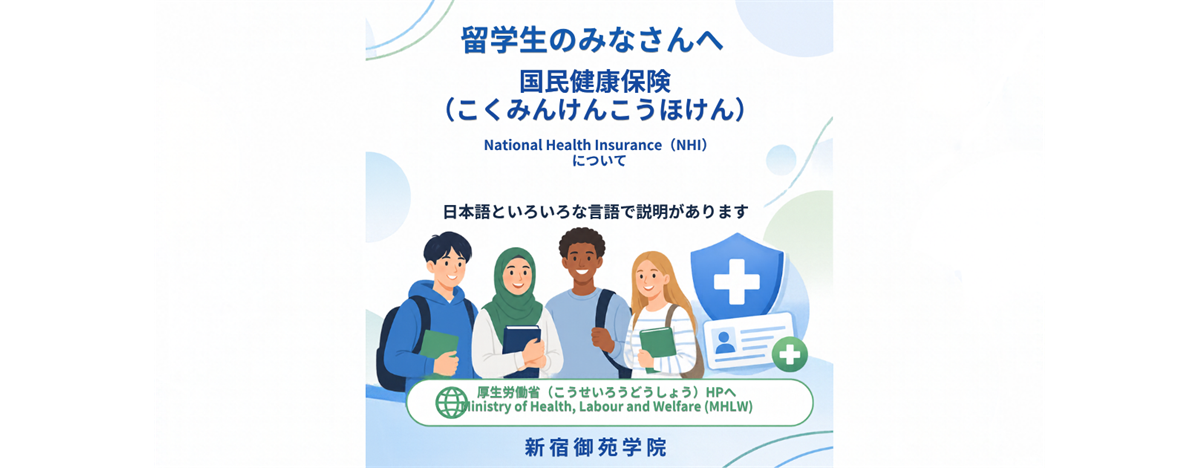
International students staying in Japan for the medium or long term generally need public health-insurance coverage unless they are covered by another eligible plan. In Shinjuku City, people who need to enroll in National Health Insurance are asked to complete the designated procedure within 14 days. Premiums depend on factors such as your municipality, household, age, and previous income, so there is no single fixed amount for every student.
Shinjuku Gyoen Gakuin also provides student support relating to health and insurance. Ask the school office if you are unsure which procedures apply to you.
Set up a phone and payment method
Compare mobile plans based on contract length, data allowance, cancellation terms, and whether English support is available. Some services require a Japanese phone number, address, or payment method, so you may need to complete these steps in stages.
For a bank account, bring the documents requested by the bank and expect identity and address checks. Requirements vary by provider. Do not rely on a single payment method during your first weeks; keep a reasonable amount of cash available while you set up your daily finances.
Learn your local waste rules
Waste separation and collection days differ by municipality and neighborhood. Check the official calendar for your address rather than following a general Tokyo guide. Your dormitory or property manager can also explain where and when to put out waste.
Days 15–21: build a realistic student routine
Plan your monthly budget
Housing is usually the largest expense. As of October 2026, Shinjuku Gyoen Gakuin’s English FAQ recommends planning approximately ¥150,000–¥200,000 per month for living costs in Tokyo, excluding tuition. The same page estimates rent near the school at about ¥73,000–¥113,000 per month, depending on the room, location, and whether you live alone or in shared accommodation.
For a broader comparison, the Study in Japan official website reports an average of ¥130,000 per month in Tokyo for international students, excluding study and research costs, based on its 2023 survey data. Your first month may cost more because of deposits, household items, transport cards, and setup fees. Build a buffer and confirm all contract charges before signing.
A simple budget should include:
- rent and initial housing costs;
- food;
- electricity, gas, and water;
- transport;
- mobile phone and internet;
- health insurance and medical costs;
- school materials and daily necessities; and
- emergency savings.
Protect your study time
Create a weekly routine that includes classes, homework, meals, sleep, shopping, laundry, and rest. A stable routine will help you learn faster and manage stress.
If you want a part-time job, do not start work until you have confirmed that you hold the required Permission to Engage in Activity Other Than That Permitted under the Status of Residence Previously Granted. International students are generally limited to 28 hours of part-time work per week during the academic term, with different limits during official long school holidays. Some types of work are prohibited. Always check the current immigration rules and speak with the school before accepting a job.
Days 22–30: prepare for safety, health, and long-term study
Save emergency information
In Japan, call 110 for the police and 119 for an ambulance or fire service. Save your school’s telephone number, your accommodation contact, and a trusted emergency contact.
Tokyo provides an official disaster-preparedness app with information in Japanese, English, Chinese, Korean, and Easy Japanese. Learn your nearest evacuation area and keep a small emergency kit at home. It is better to prepare before an earthquake, typhoon, or transport disruption happens.
Know where to ask for help
You do not need to solve every problem alone. Current students at Shinjuku Gyoen Gakuin can consult the school office about study, further education, housing, health, residence procedures, part-time work, and other aspects of life in Japan. Support is available in Japanese, Chinese, English, and Vietnamese during the office’s stated consultation hours.
If you become ill, use official multilingual medical information to find appropriate care. For a life-threatening emergency, call 119.
Review your first month
At the end of 30 days, check that you have:
- registered your address within the required period;
- completed the health-insurance procedure that applies to you;
- learned your route to school and your local waste rules;
- created a realistic monthly budget;
- saved emergency and school contact details;
- confirmed the rules before starting any part-time work; and
- asked the school about anything that is still unclear.
How Shinjuku Gyoen Gakuin supports international student life
Starting life in Tokyo involves more than attending classes. Shinjuku Gyoen Gakuin supports international students as they adjust to both study and daily life in Japan. Current students can consult the school office about Japanese study, preparation for higher education, housing, health, residence procedures, part-time-work rules, and other practical concerns. Support is available in Japanese, Chinese, English, and Vietnamese during the office’s stated consultation hours.
The school also helps students prepare for university, graduate school, or vocational school through academic counseling, application support, and interview practice. When you are unsure about a procedure or rule, please ask the school before making a decision.
Start your Japanese studies in Shinjuku
Shinjuku Gyoen Gakuin supports international students with Japanese-language study, preparation for higher education, interview practice, and daily-life consultation. The school is currently accepting applications for the 2-Year Higher Education Preparatory Course starting in April 2027.
Course availability, application periods, requirements, and fees can change. Please review the latest Higher Education Preparatory Course schedule and tuition before applying.
Ready to take the next step? Apply to Shinjuku Gyoen Gakuin or contact the school in English if you have questions about studying and living in Tokyo.