
Apartment Life in Japan: Noise, Shared Spaces, and Neighborly Manners
2026年11月24日
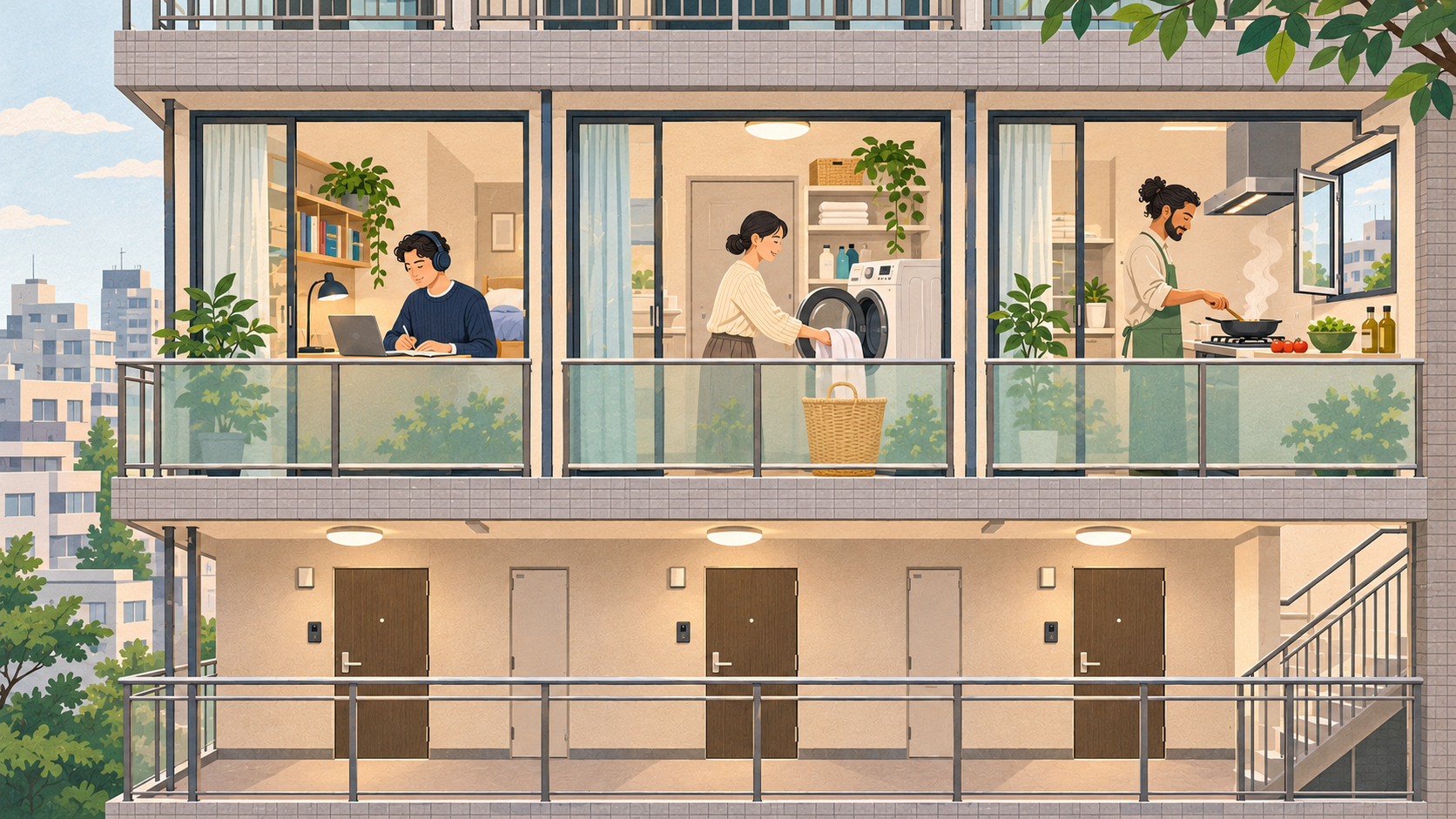
Living in Japan can be comfortable and convenient, but some everyday expectations may be different from those in your home country. In an apartment building, small sounds and daily activities can affect the people living above, below, and next door.
Understanding a few basic rules can help you avoid problems and build a good relationship with your neighbors.
Keep noise low, especially after 10 p.m.
Sound travels easily through apartment walls, floors, windows, hallways, and balconies. Conversations, music, television, footsteps, and closing doors may sound louder in the next room than you expect.
Shinjuku City asks residents to remain quiet from 10 p.m. until morning. During these hours, avoid loud conversations, parties, musical instruments, and other activities that may disturb your neighbors.
Using headphones and closing windows before making a video call are simple ways to reduce noise.
Use washing machines and vacuum cleaners at reasonable times
Washing machines and vacuum cleaners create vibrations as well as sound. Try to use them during the daytime or early evening rather than late at night or early in the morning.
If your rental contract or building rules specify permitted hours, follow those rules.
Check your rental contract before inviting long-term guests or keeping pets
Rental contracts in Japan often include rules about the number of residents, pets, subletting, and how the room may be used.
Do not allow another person to live in or use your apartment without permission. A short visit from a friend and allowing someone to stay long-term are not always treated in the same way. If you are unsure, ask the landlord or property management company before making arrangements.
Pets are not permitted in many properties. Always check your contract before bringing an animal into your home.
Keep hallways, stairs, and other shared spaces clear
Hallways and stairs are shared areas and may also serve as evacuation routes during an emergency. Do not leave suitcases, bicycles, umbrellas, garbage, or other personal belongings in these areas unless the building rules clearly allow it.
Use the designated bicycle parking area rather than leaving a bicycle on the street, sidewalk, or shared corridor.
Be considerate about cooking odors
Cooking is an important part of daily life, but strong odors can travel through windows, balconies, and ventilation systems.
Use the kitchen fan, open a window when appropriate, and clean cooking equipment regularly. These small steps can make apartment life more comfortable for everyone.
Follow local garbage rules
Garbage must be separated and placed at the designated collection point on the correct day. In Shinjuku City, residents should put out garbage by 8 a.m. on the collection day rather than leaving it outside the night before.
Collection days and sorting rules vary by area. Check the information provided by your landlord, property management company, or local government. Shinjuku City also provides multilingual information and a garbage-sorting app.
What should you do if there is a problem?
If a neighbor complains, stay calm and check what happened. A simple misunderstanding can often be resolved by changing the time or way you carry out an activity.
Do not enter another person’s home or respond aggressively. If the problem continues, contact your landlord or property management company.
Foreign residents in Shinjuku can also consult the Shinjuku City Foreign Resident Advisory Corner free of charge. Consultation availability depends on the language and day, so check the latest official information before visiting.
A quick apartment-living checklist
- Keep your voice, music, and television at a reasonable volume.
- Remain especially quiet after 10 p.m.
- Use washing machines and vacuum cleaners during reasonable hours.
- Follow the rules in your rental contract.
- Keep hallways and stairs clear.
- Use ventilation when cooking.
- Separate garbage and follow the collection schedule.
- Ask your landlord, property manager, or an official consultation service when you are unsure.
Respecting these everyday rules helps everyone feel safe and comfortable. Learning how people live together is also an important part of studying and building a life in Japan.
Official references
- Shinjuku City: Rules and Manners for Foreign Residents
- Shinjuku City: Daily Life after Moving In
- Shinjuku City: Foreign Resident Advisory Corner
The featured image is an AI-generated explanatory illustration. It does not depict the school, a school dormitory, or an actual property.